A message from the Karankawa community:
MCGLOIN BLUFF SITE (41SP11) DISTURBANCE BY PROPOSED DEVELOPMENT
Request for all Karankawa Kadla & Allies to address the Army Corps of Engineers regarding Development near Historic Karankawa Camp Site
Houston, TX March 7, 2020- On March 6, 2020 representatives from the Karanawa Kadla Nation received notice from the Ingleside On The Bay Coastal Watch Association (IOB-CWA) that MODA Mainstream LLC, has submitted to the U.S. Army Corps of Engineers & the Texas Commission on Environmental Quality, a proposal for work (SWG-1995-02221). The proposal for work is to build a new pier next to the existing pier located on Arleigh Burk Rd. The second pier would extend from Wisconsin Rd and stretch the distance into the coastal waters matching the existing pier.
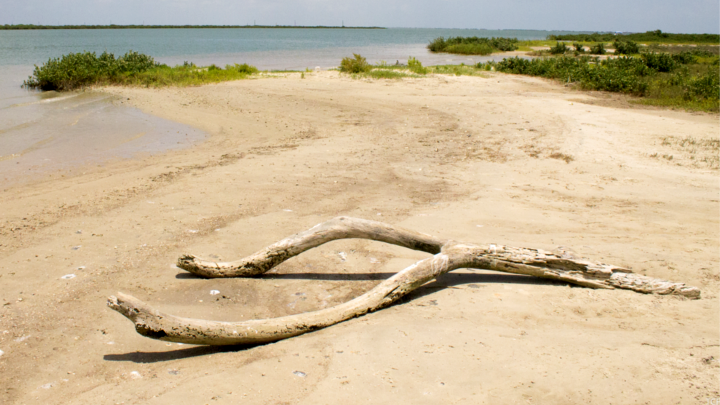
The proposed development of the land and the construction of the second pier may disturb and affect an archaeological site (41SP11), a site proving prehistoric occupation by the Karankawa prior to European colonialism. The site is eligible for listing on the National Register of Historic Places and is also eligible for designation as a State Archeological Landmark. An archeological investigation was performed in 2008 by the TRC Environmental Corporation & sponsored by the Port of Corpus Christi Authority, which produced evidence supporting the theory of occupation by the Karankawa. This investigation produced more than 39,000 sherds of pottery, 11 fragments of ceramic pipes, 103 arrow points and a variety of other items specific to the Karankawa culture and way of life. The earliest recording of our inhabitants of that camp came from the French explorer, Jean Beranger in 1720, who after anchoring his ship in Aransas Pass, noted that an encampment existed housing at least 500 persons in a dozen large round huts.
We request all Karankawa, and allies, to immediately email the U.S. Army Corps of Engineers to request a public hearing in order to establish protective measures of the historic site, which is a part of the Karankawa’s little remaining history.
Please send your request via email to swg_public_notice@usace.army.mil.
Comments made in reference to a public notice should include your name, address, phone number and the Department of the Army permit number referenced in the public notice (SWG1995-02221)
Sample Email
To whom it may concern,
[An introduction as to who you are]. I am writing to request that the U.S. Army Corps of Engineers work with the Karankawas to protect the archaeologic site located on McGloin Bluff—a significant settlement site for these First Peoples and scholars.
Department of the Army permit number referenced in the public notice: SWG-1995-02221
Thank you,
[Name]
[Address]
[Phone Number]
 Karankawas