What did the Karankawas Look Like?

What did the Karankawas Look Like?

Michelle Huang Commissioned Painting Series: 1528 – 1698

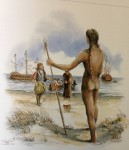
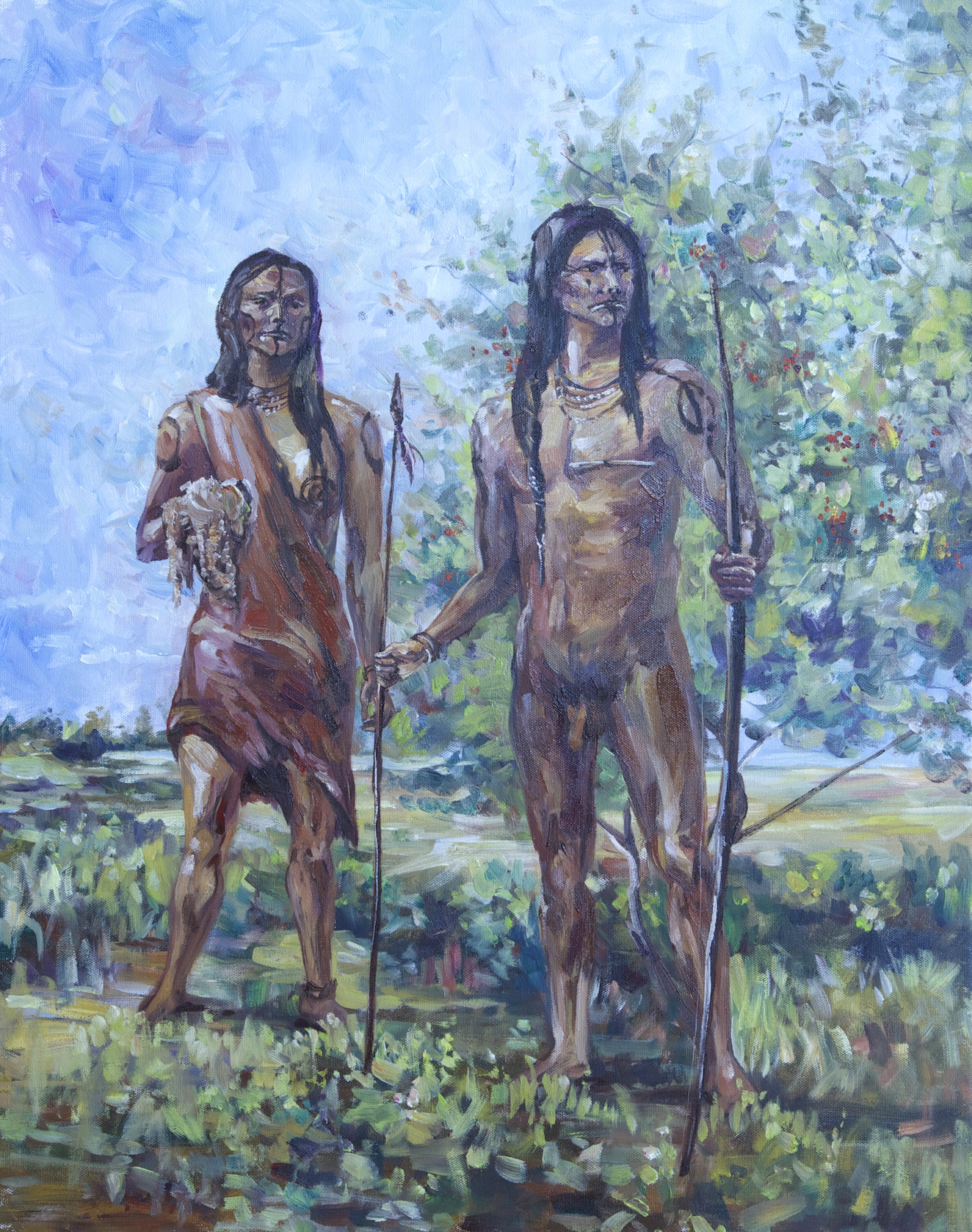
A few months back I commissioned the talented Michelle Huang to paint a portrait of two Karankawa Native Americans: one male, one female. Often being caricatured, this painting of the Karankawas served as a more accurate depiction of the sixteenth- and seventeenth-century Karankawas. In creating the piece, Michelle used first-hand descriptions from those eras, photography on this website for the portrait’s environment, and live models. I purposefully avoided providing her with other artists’ interpretations of the Karankawas (Tapia’s among others) and more telling quotes from different time periods for fear that it would influence the painting.

You can see the sources Michelle worked with below. These first-hand descriptions of the Karankawa make up almost every account of these coast people in a nearly two hundred year span. They come from primarily three sources: Álvar Núñez Cabeza de Vaca, who in 1528 crash-landed on what was likely Follets Island among the Capoque (a Karankawa-cultured tribe); Henri Joutel, a trusted captain of Sieur de La Salle’s ill-fated mission to locate the Mississippi; and Jean-Baptiste Talon, who as a boy was abducted from Fort St. Louis by the Clamcoeh. More Europeans encountered and wrote about the Karankawa during this time period, but few provided further information on what they looked like. 

I am awe-struck by the phenomenal work Michelle has done. To see more of her work or to purchase a few prints, you can check out her website here.

Depictions other artists have made of 16th & 17th century Karankawa Indians:

Continue reading “What did the Karankawas Look Like?” →

What did the Karankawa eat?

What did the Karankawa eat?

Short Answer: The most important food sources for the Karankawaswere scallops, oysters, buffalo, deer, various plants like cattail and dewberries, and fish like red and black drum, trout, and sheepshead.

Long Answer: What the Karankawa ate varied depending on the season. During the summer months, the Karankawas focused on larger game like deer and buffalo; while in the colder months, the Karankawa focused on marine resources like fish and shellfish. This is not to say that the Karankawas neglected hunting mammals during the winter or neglected fishing during the summer, rather these resources were not as nutritionally economic.

This seasonal availability of food created a push and pull factor that, in large part, is responsible for the millennium-long semi-nomadic lifestyle of the Karankawas. In the fall and winter, the aquatic resources were more abundant and the Karankawa were more active on barrier islands and around the bays. In the spring and summer, with the influx of the buffalo and with fruits becoming ripe, the Karankawas moved further inland. This roaming lifestyle allowed the Karankawas to encounter other inland Indian tribes who together cooperatively hunted buffalo and traded information, goods, and possibly blows. Continue reading “What did the Karankawa eat?” →

Cabeza de Vaca Probably Did Not Land On Galveston Island

Cabeza de Vaca Probably Did Not Land On Galveston Island

When the Panfilo de Narváez expedition devolved into desperation in modern-day Florida, the conquistadors decided to build five make-shift rafts in an attempt to make their way to a possible source of salvation—Pánuco. They believed Pánuco to only be a week or so away. In actuality, Pánuco was over a thousand miles distant.

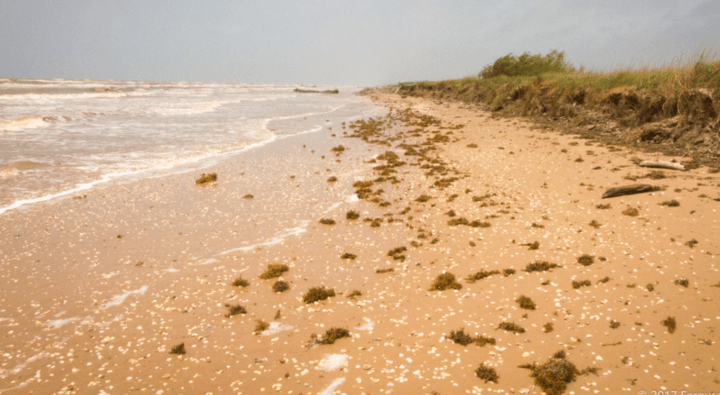
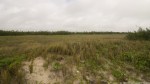
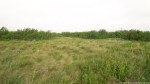
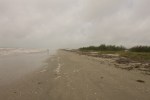
In 1528, the Narváez expedition launched their rag-tag fleet of rafts on the Bay of Horses, so named because every third day while constructing their boats, the Spaniards slaughtered a horse for food. All five rafts began to drift west, and all ultimately crash landed on the coast of Texas. Exactly where on the Texas coast has been a point of contention for the past hundred years. This week Taylor Ferguson and I took pictures of where I believe Cabeza de Vaca’s raft landed: not on Galveston Island as many think, but instead on Follets Island to the south.


Continue reading “Cabeza de Vaca Probably Did Not Land On Galveston Island” →