Indigenous Peoples of the Coastal Bend’s Comment on the Native American Graves Protection and Repatriation Act

Indigenous Peoples of the Coastal Bend’s Comment on the Native American Graves Protection and Repatriation Act

The Indigenous Peoples of the Coastal Bend (IPCB) is an intertribal community group in Corpus  Christi, Nueces County, Texas. The tribes that are in this group include Karankawa Kadla, Lipan  Apache, Mexica, Comanche, and Coahuiltecan. We applaud the proposed changes to the  NAGPRA regulations that give greater weight to geography and traditional Indigenous knowledge when determining affiliation, and we believe that these and other changes will facilitate repatriation in many cases. However, we recognize that U.S. institutions hold tens of thousands of ancestral remains that will remain unaffiliated even after these new criteria are applied. Like many others who have posted comments on these proposed changes, we believe that consultation with non-federally recognized tribes is absolutely necessary for the return of these remains. We, therefore, urge the Department of the Interior to create an open path within  NAGPRA regulations for consulting with non-federally recognized Indigenous peoples who can establish cultural and/or geographic affiliation with their ancestors’ remains.  

Continue reading “Indigenous Peoples of the Coastal Bend’s Comment on the Native American Graves Protection and Repatriation Act”

Enbridge Construction Halted!

Enbridge Construction Halted!

FOR IMMEDIATE RELEASE

May 9, 2022

Contact: Indigenous Peoples of the Coastal Bend, (Social Media and Communication) IndigenousPeopleCoastalBend@gmail.com, 361-420-0407

Enbridge Construction Halted on Karankawa Settlement 

Update on Lawsuit against the Army Corps of Engineers

CORPUS CHRISTI, Texas — On May 6th, Enbridge announced a delay in their terminal expansion planned to be constructed on the ancestral settlement and land of the Karankawa Kadla, where thousands of sacred Karankawa artifacts have been found, a place sacred to the coastal tribe where ceremony and prayer have continued for the last 2,000 years. Under the proposed briefing schedule, it was agreed that briefings will be pushed back in order for evidence to be properly cross-examined. The Karakawa Kadla and Indigenous Peoples of the Coastal Bend, was notified by the court that construction is now halted to after October 24, 2022, which allows the tribe, Indigenous groups, and their legal team to construct a stronger argument in order to protect the sacred site. 

On October 19, 2021, under the schedule for request to halt construction on the Karankawa settlement, filed by the Indigenous Peoples of the Coastal Bend, Karankawa Kadla Tribe of the Texas Gulf Coast, and Ingleside on the Bay Coastal Watch Association, dredging and construction on a new pier at the Enbridge Ingleside oil terminal will be halted and not take place before August 29th, 2022. If the expansion of the Enbridge terminal on Karankawa land and water continues, the Karankawa Kadla will lose direct access to their land and ancestral artifacts, in addition to the pollution of sacred natural waters within the region, violating several U.S. water protection laws. 

“As scientists in the latest IPCC report ring the alarm that our window to limit warming is closing, we will stand for Mother Earth and our youth, just as our ancestors did.” said Sanchez. “ We will protect what’s sacred. 

Indigenous People of the Coastal Bend is an intertribal grassroots organization from Corpus Christi, Texas. Our mission is to preserve and conserve our culture and environment. 

Website: www.stopenbridge.com

 Instagram: @indigenous_peoples_361

IndigenousPeopleCoastalBend@gmail.com

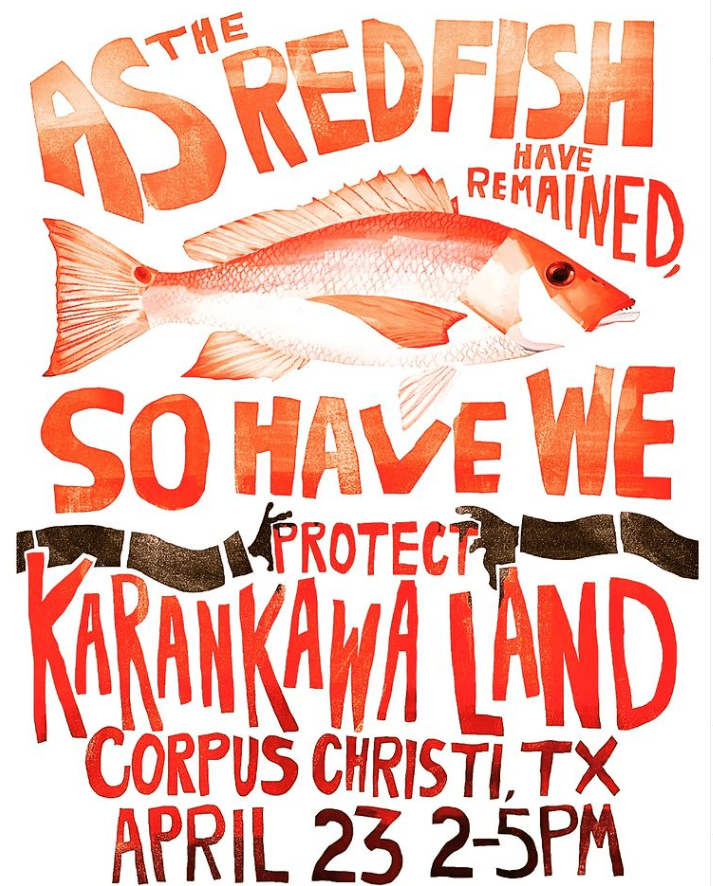
𝗔𝗦 𝗧𝗛𝗘 𝗥𝗘𝗗𝗙𝗜𝗦𝗛 𝗥𝗘𝗠𝗔𝗜𝗡𝗘𝗗, 𝗦𝗢 𝗛𝗔𝗩𝗘 𝗪𝗘!

𝗔𝗦 𝗧𝗛𝗘 𝗥𝗘𝗗𝗙𝗜𝗦𝗛 𝗥𝗘𝗠𝗔𝗜𝗡𝗘𝗗, 𝗦𝗢 𝗛𝗔𝗩𝗘 𝗪𝗘!

Redfish was sacred to our ancestors! The REDFISH, no matter the destruction happening around them, SURVIVED!

The redfish only survived because people protected the area where they breed and live.

The bay contains 32,000 acres of fish habitat. Redfish can be caught on the flats through out the year near the area where ENBRIDGE sits at.

Petroleum has been found at the bottom of the bay because on December 1983, three people were injured near the bay, following an explosion of five oil tanks at Redfish Bay Terminal. We can not allow ENBRIDGE to expand near Redfish Bay.

StopEnbridge.com

Join us!

April 23, 2022
2-5pm
Waters Edge, 602 S. Shoreline Blvd
Corpus Christi Texas.

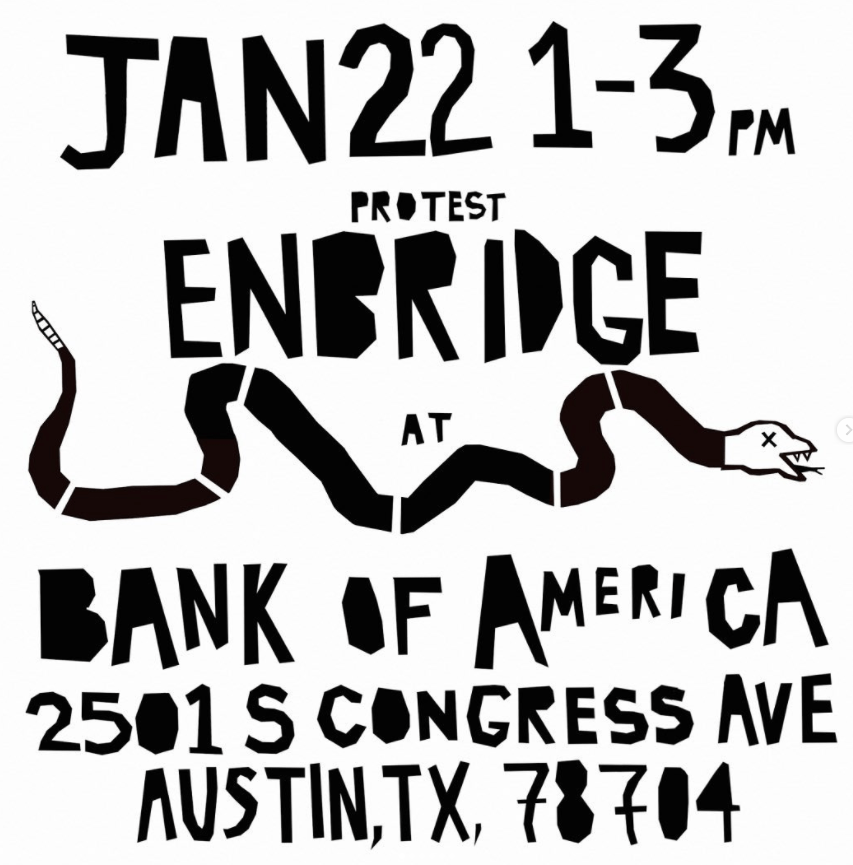
Karankawa Protests in Austin and Houston on January 22 – Protect the Gulf Coast

ENBRIDGE, a company that deals in petrochemicals, is building a pier and oil export terminal over the eastern portion of a Karankawa village site off Corpus Christi Bay in Ingleside, Texas. The pier will destroy Karankawa artifacts and the environmentally rich marshlands. Another recent plan is to build a seawall pipeline that will transport tar sands from Houston to Corpus Christi pier for export! We must continue to mobilize and bring awareness! We stand in solidarity with all of Turtle Island and will help stop ENBRIDGE here on the Texas Gulf Coast! ENBRIDGE is not welcomed in so called Texas!

How to Help: Attend the Protests Against Enbridge

Austin:

Houston:

How to Help: Share Graphics

How to Help: Follow or Consider Donating

Indigenous Peoples of the Coastal Bend

Sign up for updates

Follow on Facebook

Follow on Instagram

Donate to help with legal pursuits and to our organizers!

Cash App: $IndigneousPeople361

-OR-

PayPal: indigenouspeoplecoastalBend@gmail.com

Karankawa Tribe of Texas

Facebook Group Page

Instagram Updates

Donate to Actions:

Venmo: @Chiara-Beaumont-1

New Frequently Asked Questions Page

New Frequently Asked Questions Page

Our new Frequently Asked Questions page has reached its first stage of completion! It dispels common misconceptions about the Karankawa peoples and shows visitors that the Karankawas are still active today. Some of the corrected myths include the coastal peoples’ “giant” height and their supposed Caribbean origins. Each answer is accompanied by footnotes with primary sources that can be directly viewed.

Over the next few months, new topics will be added to the FAQ page. Some of these subjects include clan structure, hunting practices, musical instruments, smoke-signaling, and tattoos.

The Karankawa Archive will also be receiving an update in January. This time, secondary sources related to the Karankawas will be added in their entirety.

If you have any questions that you would like addressed, or if you have any unique documents, pictures, or stories related to the Karankawa peoples, feel free to reach out.

Karankawa Archive Fully Functional

Karankawa Archive Fully Functional

The Karankawa Archive is fully functional! There are over 2,500 unique primary sources ranging from 1528 to 1967 that in some way involve the Karankawa peoples.

Nearly every document is saved as a searchable PDF. If looking to do heavy-duty research with this source base, I highly recommend downloading Adobe Acrobat DC (free but make sure to remove McAfee add-ons) and using the “advanced search” function to browse through multiple PDFs. If searching by keyword, beware that the Anglo-Americans, the Spaniards, and the French all refer to the Karankawas in different ways. I have made a list of these “Karankawa” variations as a guide.

In the coming weeks, I intend to upload secondary sources that have referenced the Karankawas. I also will be creating tags such as “tattoos,” “food,” and “shelter,” to help users unfamiliar with archival research.

Also in the pipeline, is an updated Frequently Asked Questions page that will be completed by the end of 2021.

If you have any suggestions on how to improve the archive or sources to contribute yourself, please reach out.

Karankawa Kadla’s Fight Against MODA Midstream Covered by the Texas Tribune

Karankawa Kadla’s Fight Against MODA Midstream Covered by the Texas Tribune

Erin Douglas of the Texas Tribune, wrote a phenomenal article on the Karankawa Kadla’s reclamation of their history and the importance of stopping the proposed oil export terminal at Ingleside on the Bay. For more on stopping MODA visit the Indigenous Peoples of the Coastal Bend’s website or Ingleside on the Bay Coastal Watch Association’s website.

Photo by Chris Stokes for The Texas Tribune